Net-zero pledges from multinational corporations dominate headlines, but SMEs face a different reality: tighter budgets, fewer resources, and pressure from customers and regulators to decarbonise. Forget the corporate greenwashing playbook. Here's a pragmatic, financially viable pathway to carbon neutrality for mid-market businesses—complete with real ROI calculations.

Why SMEs Can't Ignore Net-Zero
Small and medium-sized businesses account for over 50% of UK business emissions. The pressure to decarbonise is intensifying from multiple directions:
1. Regulatory Mandates
- UK Climate Change Act: Legally binding net-zero target by 2050
- Energy Savings Opportunity Scheme (ESOS): Mandatory energy audits for large organisations (many SME suppliers caught in scope)
- Streamlined Energy and Carbon Reporting (SECR): Public disclosure requirements for companies >250 employees
- Upcoming regulations: Carbon Border Adjustment Mechanism (CBAM), product carbon labelling mandates
2. Supply Chain Pressure
Large buyers (retailers, OEMs, public sector) increasingly require suppliers to:
- Disclose Scope 1, 2, and 3 emissions
- Set science-based reduction targets
- Participate in CDP (Carbon Disclosure Project) reporting
- Provide product-level carbon footprints
Reality check: Suppliers without decarbonisation plans risk losing contracts. We've seen tenders disqualify bidders solely on sustainability credentials.
3. Cost Savings
Energy efficiency and carbon reduction aren't just compliance exercises—they deliver tangible financial returns:
- Energy costs reduced by 20-40% through efficiency measures
- Waste disposal costs cut through circular economy practices
- Lower operating costs improve margins and competitiveness
4. Access to Finance
Banks and investors increasingly factor climate risk into lending decisions:
- Green loans offer preferential rates for sustainability projects
- Traditional lenders require climate risk disclosures
- ESG performance impacts valuations and exit multiples

Understanding Your Carbon Footprint
Before you can reduce emissions, you need to measure them. Carbon footprints are categorised into three scopes (per GHG Protocol):
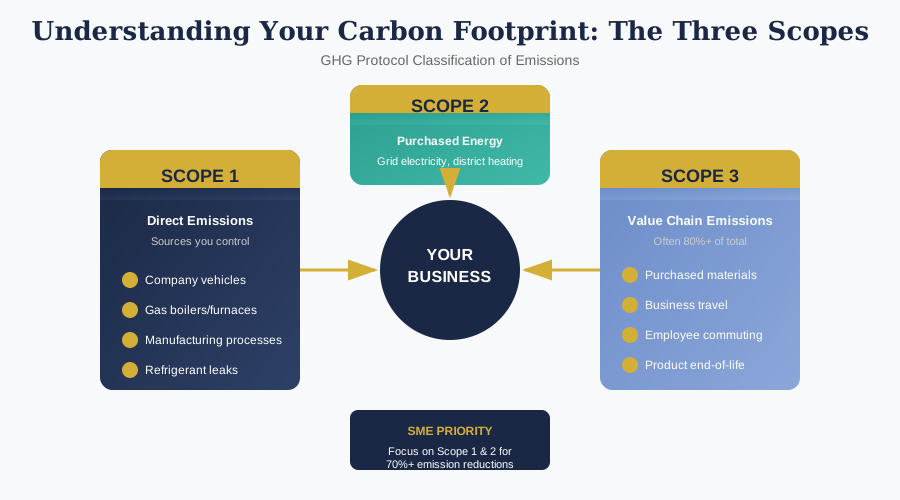
Scope 1: Direct Emissions
Emissions you directly control and produce:
- Fuel combustion in boilers, furnaces, vehicles (company cars, delivery vans)
- Process emissions (chemical reactions, refrigerant leaks)
- Fugitive emissions (methane from waste, SF₆ from electrical equipment)
Scope 2: Indirect Emissions from Purchased Energy
Emissions from electricity, heat, or steam you buy:
- Grid electricity (unless 100% renewable)
- District heating
- Purchased steam
Scope 3: Value Chain Emissions
Emissions from your supply chain and product use (often 80%+ of total footprint):
- Upstream: Purchased goods, transport, business travel, employee commuting, waste disposal
- Downstream: Product use, end-of-life disposal
SME Reality: Most small businesses can achieve 70%+ emission reductions by focusing on Scope 1 and 2 (direct control). Scope 3 is complex but increasingly required by customers.
The SME Net-Zero Roadmap: Five Phases

Phase 1: Baseline (Months 1-2)
Objective: Understand current emissions and identify hotspots.
Actions:
- Collect data: 12 months of energy bills, fuel receipts, vehicle mileage, waste disposal records
- Calculate carbon footprint: Use UK Government GHG conversion factors or hire consultant (cost: £3k-10k for SME)
- Identify top emission sources: Apply 80/20 rule—typically 80% of emissions come from 20% of activities
- Establish baseline year: Document emissions as at [Date] to track future reductions
Typical SME Manufacturer (£10M turnover) Baseline:

- Total emissions: 850 tCO₂e/year
- Scope 1 (gas boilers, forklifts): 320 tCO₂e (38%)
- Scope 2 (grid electricity): 480 tCO₂e (56%)
- Scope 3 (business travel, waste): 50 tCO₂e (6%)
Phase 2: Quick Wins (Months 3-6)
Objective: Implement low-cost, high-impact reductions to build momentum.
Actions:
Energy Efficiency
- LED lighting: Replace fluorescent/halogen with LEDs (payback: 1-2 years, 60% energy saving)
- Compressed air leak repairs: Fix leaks, reduce idle pressure (typical saving: 20-30%)
- Building insulation: Draught-proofing, roof/wall insulation (payback: 3-5 years)
- HVAC optimisation: Set thermostats to 19°C (winter) / 24°C (summer), install timers, zone controls
Renewable Energy Procurement
- Switch to renewable electricity tariff: Zero-capex option, eliminates Scope 2 emissions instantly
- Caution: Verify tariff is backed by Renewable Energy Guarantees of Origin (REGOs), not just "green marketing"
Behaviour Change
- Staff engagement: Switch off equipment when not in use, reduce heating/cooling when building empty
- Travel policy: Encourage virtual meetings, car-sharing, rail over air travel
Expected Impact: 15-25% emission reduction, ROI: 150-300%
Phase 3: Structural Decarbonisation (Years 1-3)
Objective: Invest in capital projects that eliminate high-emission processes.
On-Site Renewable Generation
- Solar PV: Install rooftop or ground-mounted solar (typical payback: 7-10 years, 25+ year lifespan)
- Battery storage: Pair with solar to maximise self-consumption, reduce grid reliance
- Wind (if suitable): Small-scale turbines for high-wind sites
Example: 100kWp solar array (£60k investment) generates 90 MWh/year, saving £13.5k annually + avoiding 24 tCO₂e. Payback: 4.5 years (with grants).
Heat Decarbonisation
- Heat pumps: Replace gas boilers with air-source or ground-source heat pumps (3-4× more efficient)
- Biomass boilers: Use sustainably sourced wood pellets (carbon-neutral)
- Process heat recovery: Capture waste heat from machinery, use for space heating or pre-heating
Electrification of Fleet
- Replace diesel vans with electric vehicles (EVs)
- Install EV charging infrastructure
- Cost: Higher upfront, lower running costs (electricity vs. diesel), grants available (e.g., Plug-in Van Grant)
Expected Impact: 40-60% total emission reduction
Phase 4: Scope 3 and Circular Economy (Years 2-4)
Objective: Address supply chain emissions and waste.
Supplier Engagement
- Request carbon footprint data from key suppliers
- Prioritise low-carbon suppliers in procurement
- Collaborate on joint reduction initiatives
Product Design for Sustainability
- Use recycled or bio-based materials
- Design for longevity, repairability, recyclability
- Reduce packaging, switch to compostable alternatives
Waste to Zero
- Divert waste from landfill (anaerobic digestion, recycling)
- Implement reuse/refurbishment programmes
- Industrial symbiosis (sell waste as feedstock to other industries)
Expected Impact: 10-20% reduction (Scope 3 harder to control but increasingly important)
Phase 5: Residual Offsets and Net-Zero (Year 5+)
Objective: Neutralise remaining emissions through verified carbon offsets.
Reality Check: Offsets should be a last resort, not a substitute for real reductions. Reduce first, offset residual.
High-Quality Offset Criteria
- Additionality: Project wouldn't happen without carbon finance
- Verification: Certified by Gold Standard, Verified Carbon Standard (VCS), or Woodland Carbon Code
- Permanence: Carbon removed/avoided long-term (avoid short-lived sequestration)
- No double-counting: Credits retired, not resold
Preferred Offsets:
- UK Woodland Creation: Support native tree planting (Woodland Carbon Code verified)
- Direct Air Capture: Emerging technology, high cost but permanent removal
- Renewable energy projects in developing countries: Displace fossil fuel generation
Cost: £10-50/tCO₂e depending on project type and quality
The Financial Case: Real ROI Calculations
Net-zero isn't a cost centre—it's an investment with measurable returns.
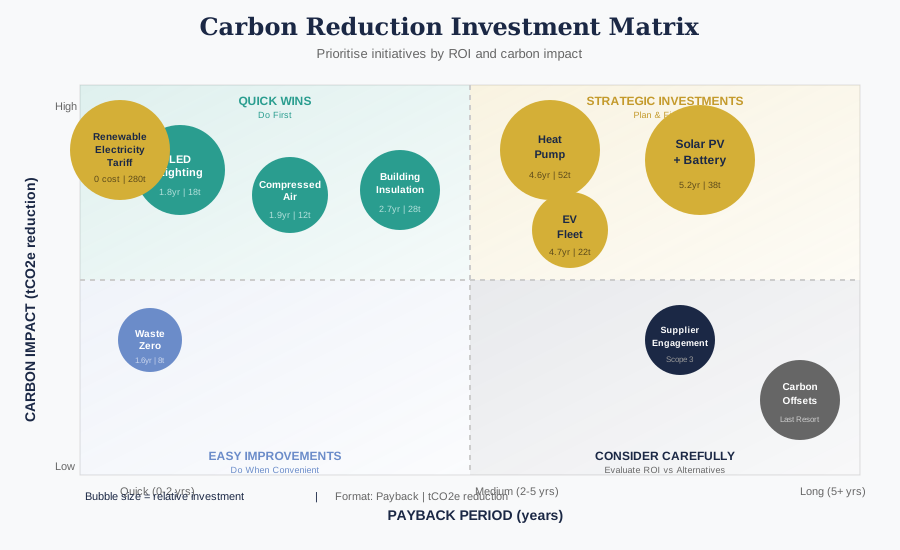
Case Study: Engineering SME (50 employees, £8M turnover)
Baseline Emissions: 620 tCO₂e/year
| Initiative | Investment | Annual Saving | CO₂ Reduction | Payback |
|---|---|---|---|---|
| LED lighting retrofit | £12,000 | £6,800 | 18 tCO₂e | 1.8 years |
| Compressed air system upgrade | £8,000 | £4,200 | 12 tCO₂e | 1.9 years |
| Building insulation | £15,000 | £5,500 | 28 tCO₂e | 2.7 years |
| 100kWp solar PV + battery | £85,000 | £16,200 | 38 tCO₂e | 5.2 years |
| Heat pump system | £45,000 | £9,800 | 52 tCO₂e | 4.6 years |
| EV fleet (3 vans) | £35,000 | £7,500 | 22 tCO₂e | 4.7 years |
| Waste-to-zero programme | £5,000 | £3,200 | 8 tCO₂e | 1.6 years |
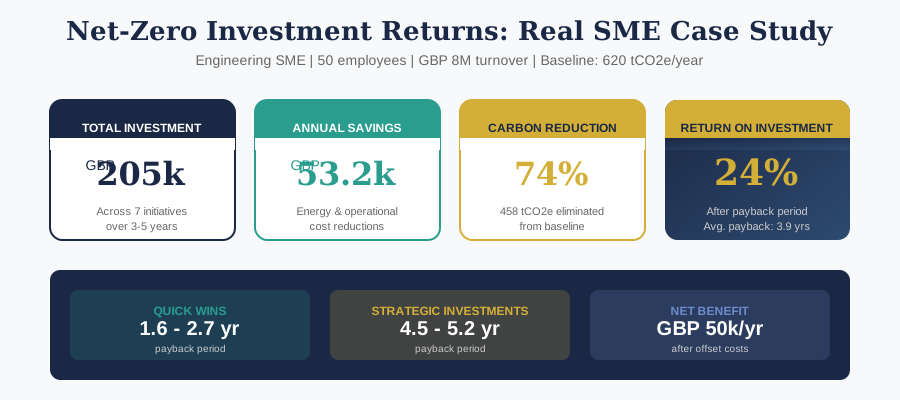
| TOTAL | £205,000 | £53,200/year | 178 tCO₂e (29%) | 3.9 years |
Plus: Switching to renewable electricity tariff (zero investment) eliminates remaining Scope 2 emissions (280 tCO₂e).
Total Impact:
- Emission reduction: 458 tCO₂e (74% of baseline)
- Residual emissions: 162 tCO₂e (offset at £20/tCO₂e = £3,240/year)
- Net annual benefit: £53,200 cost savings – £3,240 offsets = £49,960/year
- ROI: 24% (after payback period)
Funding and Grants
Multiple funding sources can reduce upfront costs:
- SME Energy Efficiency Loan Scheme (Scotland): Interest-free loans up to £100k for energy efficiency projects
- Industrial Energy Transformation Fund (IETF): Grants for energy efficiency and low-carbon heat (UK-wide)
- Green Business Fund: Grants and loans for renewable energy, waste reduction
- Salix Finance: Interest-free loans for public sector and some private organisations
- Enhanced Capital Allowances (ECAs): 100% first-year tax relief on energy-efficient equipment
Common Pitfalls to Avoid
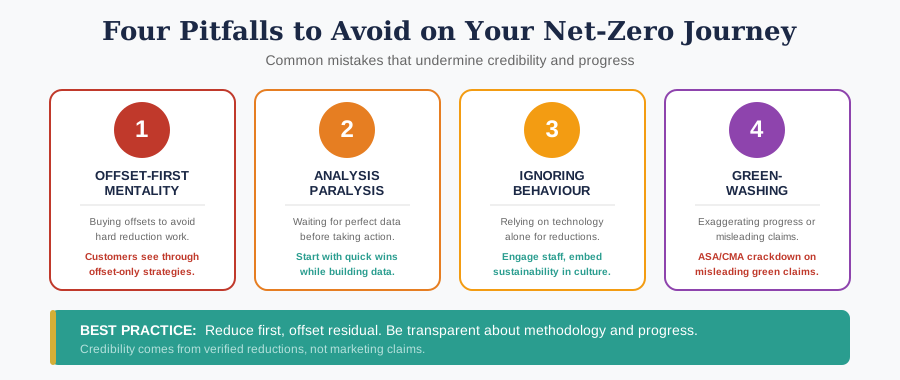
1. Offset-First Mentality
Don't buy offsets to avoid hard work. Reduce emissions first, offset residual only. Customers and investors see through "carbon neutral" badges backed solely by offsets.
2. Analysis Paralysis
Don't wait for perfect data or comprehensive Scope 3 mapping. Start with quick wins (LED, behaviour change) while building measurement capability.
3. Ignoring Behaviour
Technology alone won't deliver net-zero. Engage staff, embed sustainability in culture, incentivise energy-saving behaviours.
4. Greenwashing
Make credible, verifiable claims. Don't exaggerate progress or claim "net-zero" without transparent methodology. Regulators (ASA, CMA) are cracking down on misleading green marketing.
Conclusion: Net-Zero Is an Opportunity, Not a Burden
SMEs have a strategic advantage in the net-zero transition: agility. You can implement changes faster than large corporations, test new approaches, and adapt quickly.
The businesses that thrive in the low-carbon economy will be those that:
- Measure rigorously: Track emissions, identify hotspots, set targets
- Act pragmatically: Quick wins first, then structural investments
- Invest strategically: Prioritise projects with strong ROI and carbon impact
- Engage authentically: Build credibility through transparent reporting, not marketing spin
Net-zero isn't a compliance checkbox. It's a competitive advantage. Lower costs. Resilient supply chains. Access to green finance. Differentiation in tenders. Customer loyalty.
The question isn't whether to decarbonise. It's whether you'll lead or be left behind.